Documentation

Warfront Legends Protocol

Reference docs for deterministic combat, on-chain heroes, territory yield, the seed beacon, and the WARC economy on Base.

Network

Base

Game Type

Idle Auto-Battler

Hero Standard

ERC-721

Item Standard

ERC-1155

Token

$WARC

01

System Overview

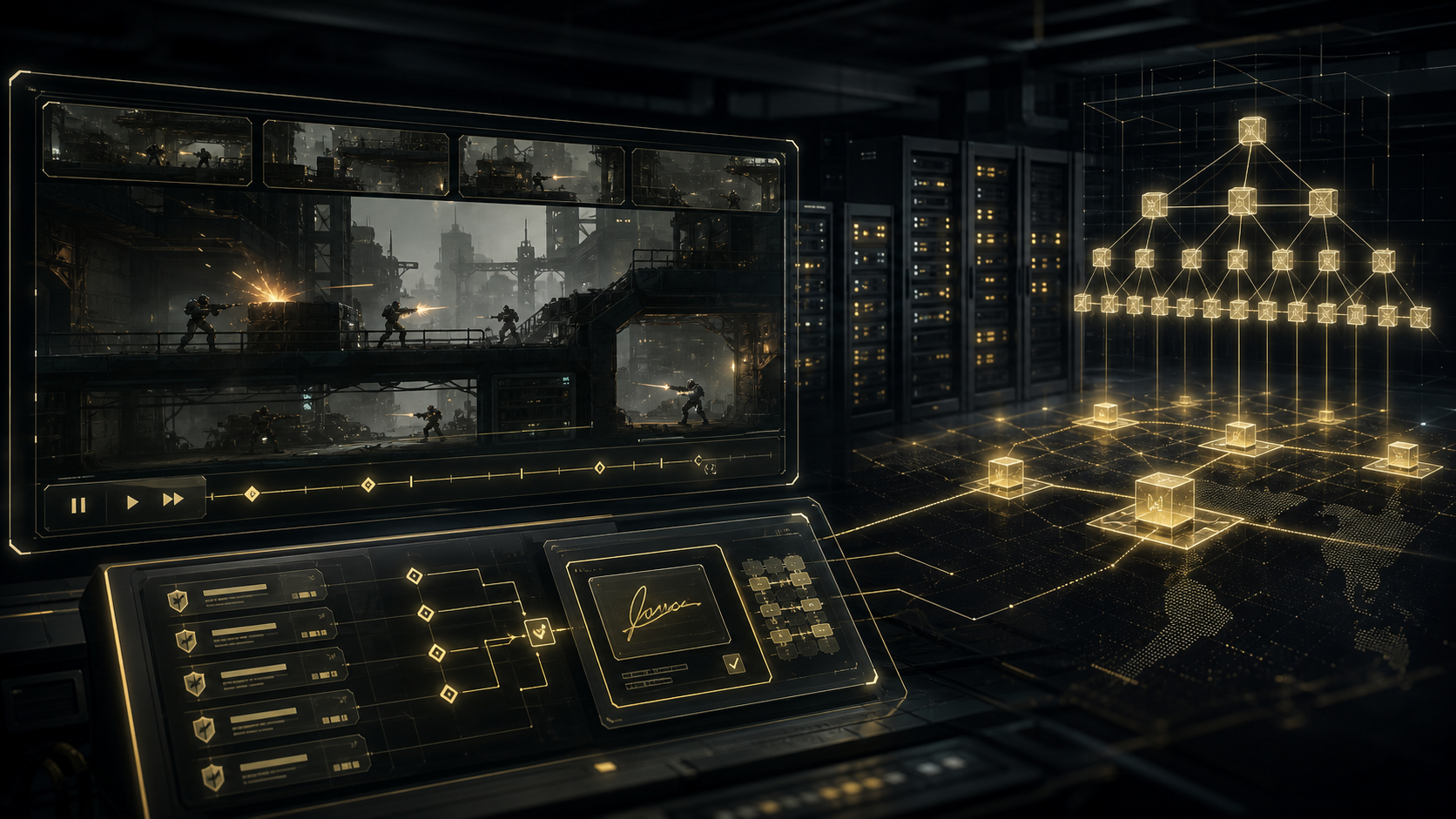
Warfront Legends is a deterministic idle auto-battler on Base. The chain records ownership, seed history, ruleset versions, territory control, and reward distribution, while combat is derived from public inputs.

Players own heroes and items, commit rosters to battles or territory contests, and let scheduled rounds resolve without needing to stay online. The operator hosts the app, indexer, and simulator, but does not have authority to override battle outcomes.

Player wallet and roster commitments
Operator-hosted client and simulator
Base contracts for heroes, territories, seeds, rulesets, and rewards
02

Heroes and Items

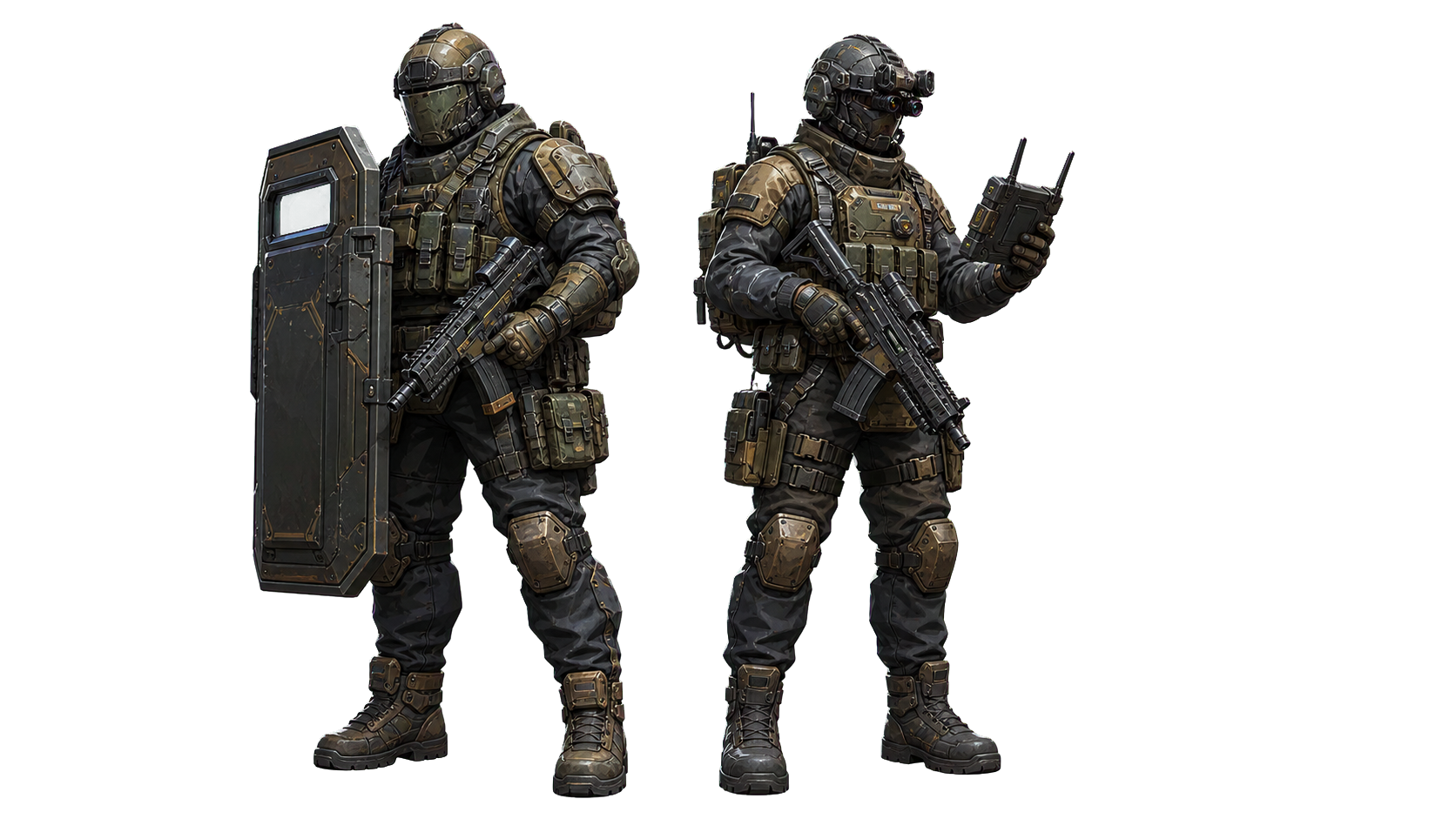
Each hero is an ERC-721 token with a stable identity and combat attributes. Intrinsic attributes are set at mint, while earned attributes such as experience, veterancy, and equipped items accumulate through play.

Items are ERC-1155 assets that modify hero behavior through public ruleset effects. Equipping an item records the binding on-chain so any simulator can reproduce the final roster state.

Classes: infantry, armor, artillery, support, command
Bounded issuance per class and rarity
ERC-1155 items with ruleset-published effects

03

Deterministic Combat

Combat takes two ordered rosters, a round seed, and a ruleset version. From those inputs it produces survivors, damage, experience, and a battle log that any verifier can reproduce.

The simulator avoids floating point arithmetic. Randomness is consumed from a deterministic stream, and event ordering uses strict tie-breaking rules so separate implementations produce byte-identical outputs.

Input tuple: (Ra, Rb, s, v)
Randomness from H(seed || roster A || roster B)
Ruleset upgrades never rewrite past battles

04

Seed Beacon

Every battle round uses a seed published on-chain by the beacon. The seed combines the previous seed, the round boundary block hash, and a verifiable random function output.

If the beacon operator fails to publish in time, the protocol falls back to a block-hash seed after a timeout. This keeps the game live while making the weaker randomness mode visible.

Hourly default cadence
VRF-backed seed construction
Timeout fallback for liveness

05

Territories

Territories are on-chain regions that can be controlled, defended, and contested. Each territory has a controller, yield rate, defense roster slot, and terrain class.

A challenger commits a roster against a territory. The committed roster, defense roster, current seed, and ruleset determine whether control transfers or remains with the defender.

Fixed territory set at launch
Terrain modifiers are part of the public ruleset
Yield is verified against control-transfer history

06

$WARC Token

$WARC is the ERC-20 utility token for territory yield, hero summoning, item crafting, marketplace activity, and governance.

Emissions are bounded by the territory yield schedule. Sinks such as summoning, crafting, challenge fees, and governance bonds are calibrated by governance to absorb part of yearly emissions.

45% territory yield over six years
20% ecosystem and community grants
Governance-controlled sinks and treasury allocation

07

Idle Mechanics

The game is built for asynchronous engagement. A player can commit a roster once, then let that roster continue participating until they choose to redeploy.

Territory yield accrues continuously, and heroes gain experience from battles whether or not the player is online. The loop rewards strategic roster management instead of constant clicking.

Fixed battle cadence
Claim-on-demand territory yield
Anti-farming pressure through bounded hero supply and yield decay

08

Marketplace and Liquidity

Heroes and items trade on a permissionless marketplace contract on Base. The official docs and app provide a front-end, while the contracts remain open to third-party interfaces.

Listings may be denominated in WARC or USDC. Marketplace fees support creator royalty allocation and token burns, while a WARC/USDC pool is seeded at token generation.

Permissionless exchange contract
WARC and USDC listing support
Time-locked launch liquidity

09

Failure Modes

The protocol assumes the operator can go offline, make mistakes, or suffer key compromise. Because inputs and rules are public, false combat attestations can be contradicted by independent re-simulation.

Critical contracts use conservative primitives, audits, bug bounties, and timelock-gated upgrade paths. Ruleset bugs are handled through governance-approved patches after public review.

Operator shutdown does not erase assets
False results are detectable
Beacon failures trigger fallback and replacement governance

10

Privacy

Warfront Legends stores only the data needed for public verification: wallet addresses, owned heroes, territory control, and battle history. This public state is the cost of trust-minimized gameplay.

Players can use the hosted client or interact with Base-compatible tools directly. No additional identifying information is required by the protocol design.

Public ownership and battle state
No required off-chain identity
Direct chain interaction remains possible